Choosing the Right Auto Window Tint for Calgary Driving with MY Auto YYC
If you’re looking into auto window tinting, the biggest decision isn’t always how dark you want your windows. The type of film you choose can affect heat rejection, UV protection, appearance, durability, and overall driving comfort.
Two options you’ll commonly come across are dyed window tint and ceramic window tint. Both can change the appearance of your vehicle and provide some level of glare and UV protection, but they work differently and offer different levels of performance. The International Window Film Association (IWFA) identifies coloured or dyed films as an entry-level option that can provide appearance, privacy, glare, UV, and moderate heat-control benefits, while nanoceramic films use advanced non-metallic technology to manage solar heat.
For Calgary drivers dealing with bright summer sun, long drives, and year-round temperature changes, understanding that difference can make it easier to choose the right film for your vehicle.
What Is Dyed Window Tint?
Dyed window tint is one of the more traditional types of automotive window film. It uses a colouring layer within the film to create a darker appearance while helping reduce glare and some of the sun’s heat.
It’s often chosen by drivers who primarily want a cleaner, darker look without spending as much on a higher-performance film. Quality dyed films can still provide useful UV protection and moderate heat reduction. However, their solar performance is generally more limited compared with advanced ceramic films.
For someone looking for a straightforward tint upgrade focused on appearance, privacy, and basic comfort, dyed film can be a practical option.
What Is Ceramic Window Tint?
Ceramic window tint takes a different approach. Instead of relying primarily on a dyed layer, ceramic films use advanced ceramic particles designed to manage solar energy while remaining non-metallic and generally non-reflective.
This gives ceramic film some important advantages. It can provide strong heat rejection without requiring an extremely dark appearance, while also maintaining good visibility and avoiding the signal-interference concerns sometimes associated with older metallic films.
That makes ceramic tint particularly appealing to Calgary drivers who want better cabin comfort without choosing an excessively dark film.
Ceramic vs Dyed Tint for Heat Rejection
Heat rejection is probably the biggest difference between the two.
Dyed tint can reduce some solar heat, but its primary purpose is not necessarily maximum thermal performance. Ceramic films are engineered specifically to provide stronger solar heat management.
The IWFA explains that automotive window film can reduce solar heat entering a vehicle, helping improve interior comfort. It also notes that performance depends on the type of film and its solar-performance characteristics.
This can make a noticeable difference during Calgary’s summer months. A vehicle sitting outside in direct sunlight can become uncomfortable quickly, particularly with a large windshield or panoramic glass roof. A higher-performance ceramic film can reduce the amount of solar energy entering through the side and rear windows.
It’s worth remembering that darker does not automatically mean better heat rejection. Modern window films can provide substantial solar control without being extremely dark.
UV Protection
Both quality dyed and ceramic films can provide UV protection, but the exact performance depends on the specific product.
Quality automotive window films can block a significant portion of the sun’s damaging UV radiation. The IWFA notes that automotive films can block up to 99% of harmful UV rays, helping protect both occupants and vehicle interiors.
This matters for more than just comfort. Prolonged sunlight can contribute to fading and deterioration of interior materials such as leather, upholstery, dashboards, and trim.
If you’re keeping your vehicle for several years, UV protection can be an important part of preserving its interior.
Glare Reduction and Driving Comfort
Both types of tint can reduce glare.
If you’ve ever driven toward a low Calgary sun and found yourself squinting just to see the road, you already understand how distracting glare can be.
Window film reduces the amount of visible light entering through the glass, which can make bright conditions more comfortable. The darker the film, generally the more visible light it blocks, although the overall performance of a film should not be judged by darkness alone.
Ceramic film can be a particularly good choice for drivers who want heat and glare reduction without relying on an extremely dark shade.
Appearance and Privacy
This is where dyed tint remains attractive.
Dyed film can provide the darker appearance many drivers want at a relatively accessible price point. Darker windows can also provide more privacy by making it harder to see into the vehicle.
Ceramic tint can provide the same general aesthetic range, depending on the product and VLT selected. The difference is that you don’t necessarily have to choose a very dark shade to get strong heat-rejection performance.
That gives drivers more flexibility when balancing appearance, visibility, comfort, and local requirements.
Durability and Long-Term Performance
Another consideration is how the film is expected to perform over time.
Lower-quality dyed films can be more susceptible to fading or changes in appearance as they age. Film quality, installation, exposure, and maintenance all influence longevity.
Ceramic films are generally positioned as a higher-performance, longer-term option. However, it’s still important to look at the manufacturer’s specifications and warranty rather than assuming every ceramic film is identical.
The film itself is only part of the equation. Proper preparation and professional installation also matter. The IWFA’s automotive installation guidance emphasizes thorough cleaning and preparation before film is applied to the glass.
Does Ceramic Tint Cost More?
Generally, yes.
Ceramic window tint typically costs more than dyed tint because you’re paying for more advanced film technology and higher solar-performance capabilities.
The better question isn’t simply whether ceramic costs more. It’s whether those additional benefits are useful for the way you drive.
If you mainly want a darker appearance and basic privacy, dyed tint may meet your needs. If you’re regularly dealing with Calgary’s summer heat and want stronger heat rejection, UV protection, and long-term performance, ceramic tint may provide better value.
Which Is Better for Calgary Drivers?
There isn’t one answer for every vehicle.
Dyed tint can make sense when appearance, privacy, glare reduction, and upfront cost are your main priorities. It’s a simple way to change the look of a vehicle while adding basic solar-control benefits.
Ceramic tint makes more sense when heat rejection and overall performance are higher priorities. It is particularly useful for drivers who spend a lot of time in their vehicles, park outside, or want to keep the cabin more comfortable during Calgary’s sunny summer days.
For many daily drivers, the additional investment in ceramic film can be worthwhile because the benefits go beyond appearance.
Don’t Choose Tint Based Only on Darkness
One of the easiest mistakes when comparing window tint is choosing a film based entirely on how dark it looks.
Visible Light Transmission, or VLT, measures how much visible light passes through the film. A lower VLT percentage means a darker film. However, VLT doesn’t tell you everything about heat-rejection performance. The IWFA recommends looking at broader performance measurements such as total solar energy rejection rather than relying on infrared-rejection numbers alone.
In other words, a darker film isn’t automatically a higher-quality film.
When comparing options, ask about the film’s actual specifications and what those numbers mean for your vehicle.
What About Alberta’s Window Tint Rules?
Choosing a window tint in Calgary also means considering Alberta’s requirements.
Alberta’s road-test requirements state that added tinting or film is not permitted on the driver and front passenger windows. The province’s inspection documentation also addresses restrictions on windshield and front-side window tint.
This is important because choosing a tint based solely on appearance can lead to problems if the installation doesn’t comply with Alberta requirements.
A professional Calgary window tinting shop should be able to explain which windows can be tinted and what options are appropriate for your vehicle.
Professional Installation Matters
Even an excellent film won’t look or perform its best if it’s poorly installed.
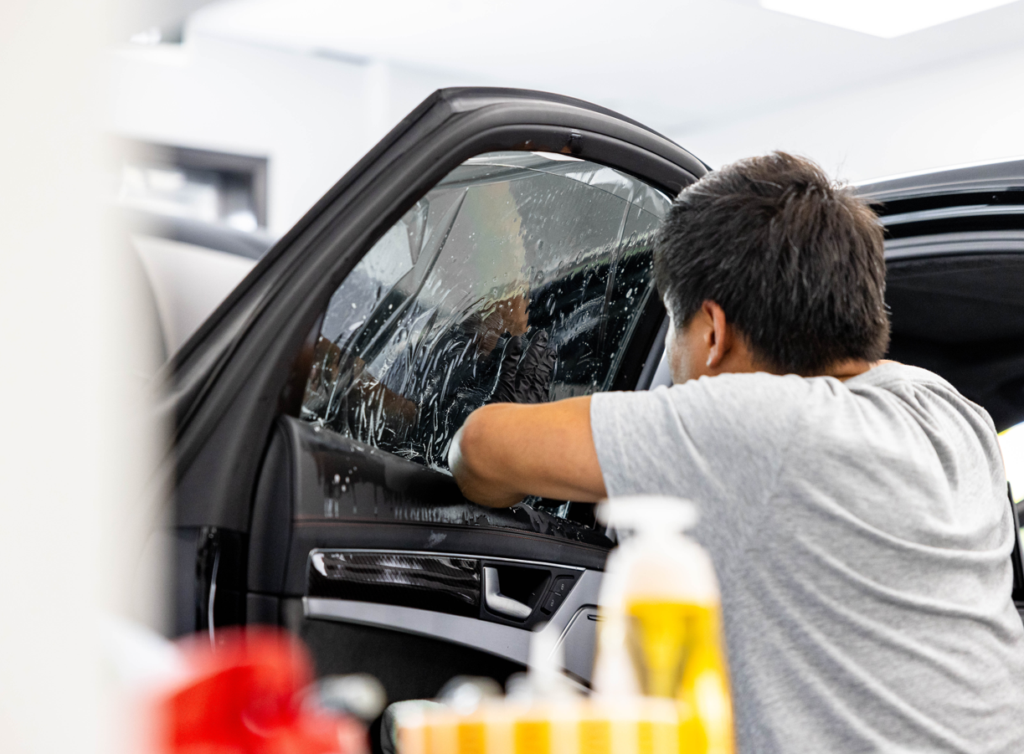
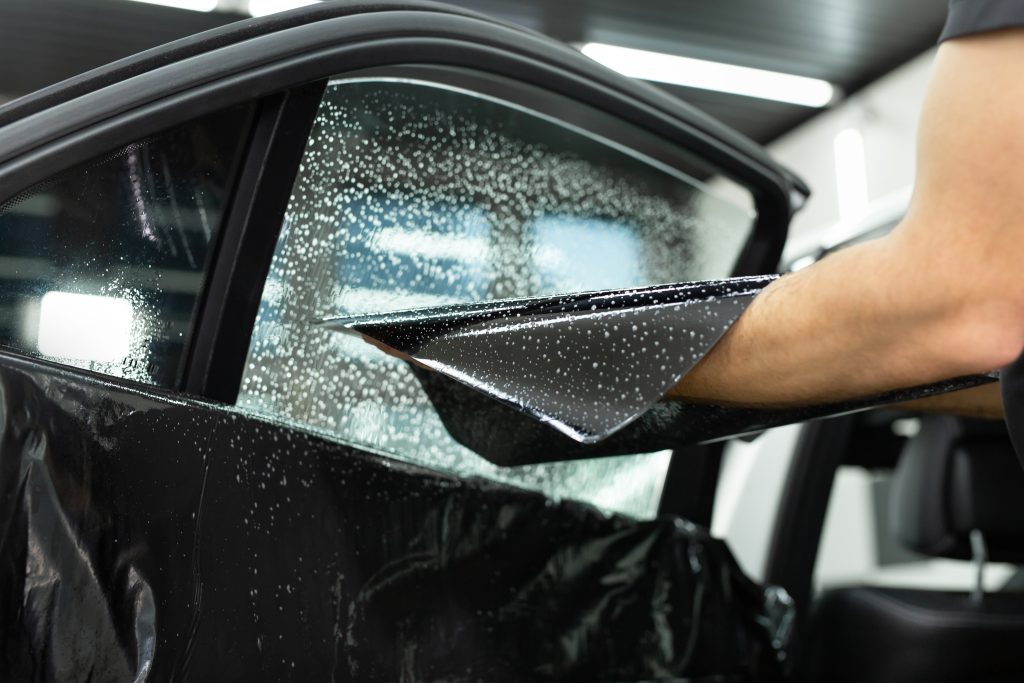
Professional installation involves carefully cleaning the glass, preparing the surface, cutting the film accurately, and applying it without unnecessary contamination or imperfections. The film also needs time to properly cure after installation.
A quality installation should leave you with clean edges, consistent coverage, and a smooth appearance.
This is especially important if you’re investing in a higher-end ceramic film. There’s little value in paying for premium material if the installation doesn’t meet the same standard.
Ceramic or Dyed Window Tint: Which Should You Choose?
The right choice comes down to what you want from your car window tinting in Calgary.
If you’re mainly looking for a darker appearance, privacy, and basic glare and UV protection, dyed tint can be a sensible choice. If your priority is reducing cabin heat, improving summer comfort, and getting stronger overall solar performance, ceramic tint is worth considering.
Neither option should be selected simply because it is darker or more expensive. Look at the film’s specifications, expected performance, warranty, installation quality, and how you actually use your vehicle.
For Calgary drivers who spend a lot of time on the road, especially during bright summer weather, investing in a higher-performance film can make the vehicle noticeably more comfortable without sacrificing visibility or relying on an overly dark appearance.
My Auto YYC – MY Auto – Ceramic Coating, PPF, Detailing & Sales
My Auto YYC is a Calgary-based automotive protection and detailing shop specializing in ceramic coating, paint protection film, window tinting, and vehicle preservation. MY Auto
Address:
4115 Macleod Trl, Calgary, AB T2S 2P4
Phone:
(587) 441-4618
Hours:
Monday to Friday: 8:00am to 5:00pm
Saturday: 10:00am to 12:00pm
Sunday: Closed