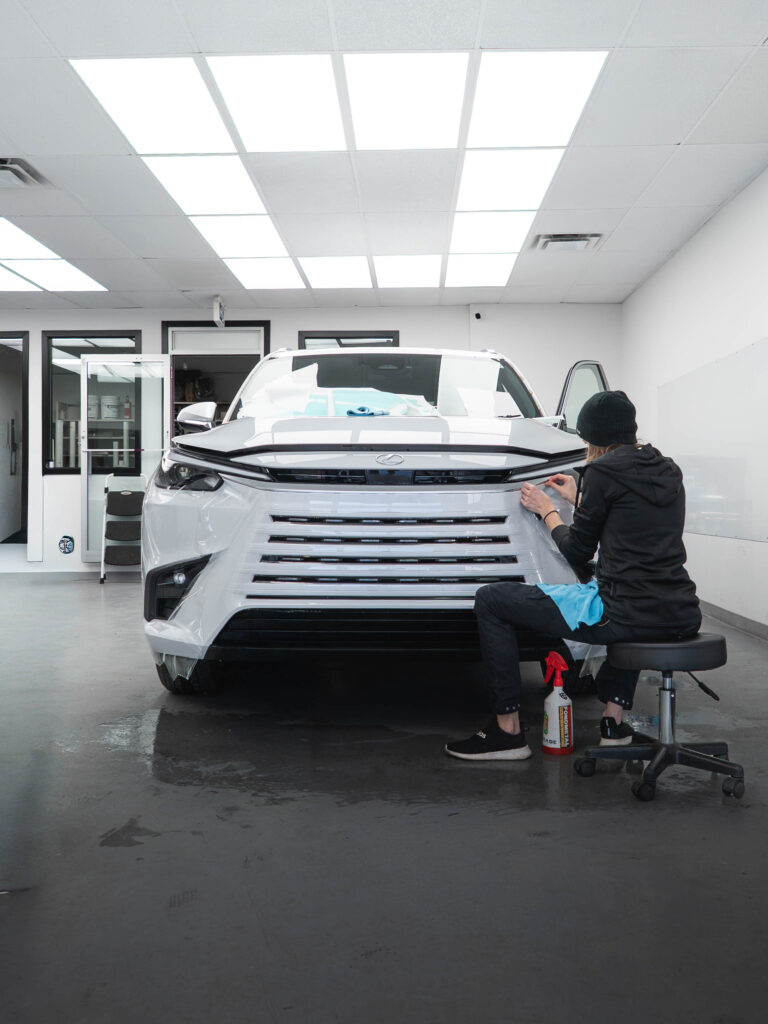
Understanding DIY PPF and Professional Installation with MY Auto YYC
Paint protection film can look simple when you watch someone install it online. Clean the surface, spray the solution, position the film, push out the moisture, and you’re done.
In reality, installing PPF is much more involved. The film needs to sit correctly across curved panels, edges need to be properly prepared, and even small amounts of dust or contamination can affect the finished result. That’s why some vehicle owners who initially consider a DIY paint protection film kit eventually decide that professional installation makes more sense.
DIY kits aren’t necessarily useless. For someone experienced with automotive film who wants to work on a small, relatively simple area, they can be an option. But if you’re protecting a new vehicle, an entire front end, or a vehicle you care about keeping in excellent condition, the installation itself becomes just as important as the film.
What Does a DIY Paint Protection Film Kit Include?
A DIY PPF kit generally gives you pre-cut pieces of film designed for specific areas of your vehicle. Depending on the kit, you may also receive installation tools and instructions.
The appeal is obvious. You can purchase the material yourself, work on your own schedule, and avoid paying for professional labour.
The problem is that buying the film is only the beginning.
You still need to prepare the paint, clean the surface thoroughly, position the film correctly, manage the installation solution, work around curves and edges, and avoid trapping dust or debris underneath the film.
A mistake on one panel can also mean wasting that piece of film and starting over.
Why PPF Installation Is Different From Applying a Sticker
PPF isn’t simply a large sticker that you place on the car.
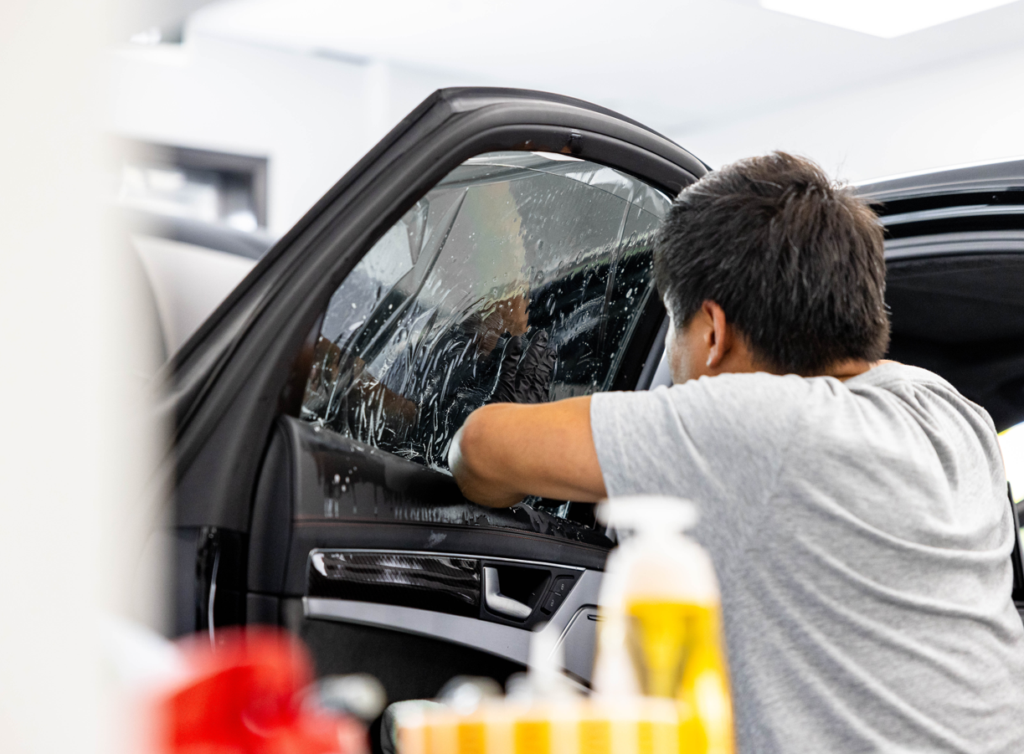
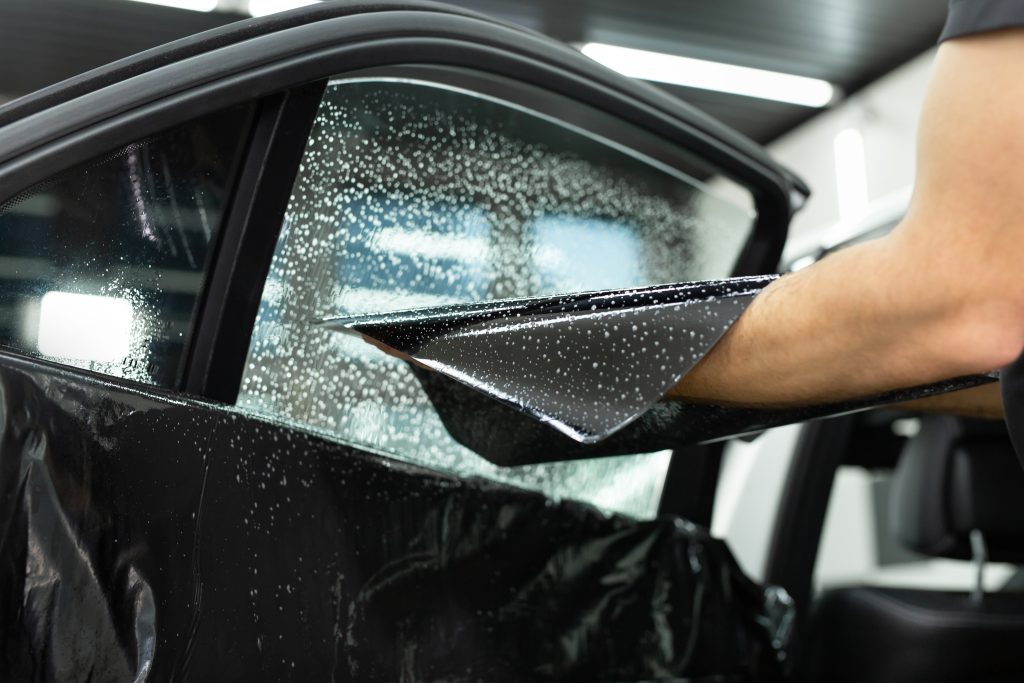
Paint protection film is designed to conform to vehicle panels, including bumpers, fenders, mirrors, and other areas with curves and complex shapes. Installation involves controlling the film while it is positioned over the surface and making sure it bonds properly.
The cleaner the surface and installation environment, the better the opportunity for a smooth result.
This is one reason professional installers place so much emphasis on preparation. MY Auto’s PPF service specifically identifies preparation and clean edges as important parts of a successful installation.
Surface Preparation Can Make or Break the Installation
Before PPF goes onto a vehicle, the paint needs to be properly cleaned and prepared.
Road grime, dust, oils, old wax, contaminants, and other debris can interfere with adhesion. If contamination is trapped beneath the film, it may remain visible after installation or contribute to lifting around the affected area.
This becomes especially relevant in Calgary, where vehicles regularly encounter gravel, road debris, salt, and other contaminants.
Professional installers have a process for preparing the vehicle before applying the film. That preparation is one of the areas where a professional installation differs from simply opening a kit and following the instructions at home.
Getting the Film to Fit Correctly
Pre-cut kits can make DIY installation easier because the film is already shaped for a particular vehicle.
But pre-cut doesn’t mean effortless.
The film still needs to be positioned accurately, especially around corners, body lines, headlights, sensors, and other features. A small alignment problem can become obvious once the film is fully installed.
Professional shops also have access to vehicle-specific pattern systems and experience working with different body styles. That experience helps installers understand where film needs to sit, where edges can be wrapped, and how to work with difficult areas.
Edges Matter More Than Most People Realize
A PPF installation can look good from a few feet away and still have problems around the edges.
Edges are where dirt and moisture can become visible if the film isn’t properly positioned and sealed. MY Auto specifically highlights clean edges as an important part of long-term PPF performance because contamination around panel edges can contribute to lifting.
This is one of the details that’s easy to overlook when comparing a DIY installation with professional work.
You’re not just paying for the piece of film. You’re paying for how that film is fitted to the vehicle.
What Happens If You Get a Bubble?
Small amounts of moisture can occur during a PPF installation and may disappear during the curing process. But trapped contamination, poor application, or installation errors can leave permanent imperfections.
Common problems associated with inexperienced installations include:
- Bubbles
- Contamination beneath the film
- Creases
- Stretch marks
- Uneven edges
- Lifting corners
- Poor alignment
Some of these issues can be corrected. Others may require removing the film and replacing it.
That means a DIY job that appears cheaper at the beginning can become more expensive if you need to purchase replacement material or pay someone to redo the work.
DIY vs Professional PPF Cost
The biggest reason people consider DIY PPF is usually cost.
You aren’t paying professional installation labour, so the initial price of the kit can be lower.
However, the actual cost isn’t just the price of the film.
You may also need installation tools, cleaning products, lighting, workspace, and replacement film if something goes wrong. Your time is another factor.
Professional PPF costs more upfront because the quote includes the material, preparation, installation, experience, equipment, and warranty considerations.
MY Auto currently lists PPF packages starting at $389, with pricing determined by factors such as coverage, vehicle size, complexity, paint condition, and film type.
Film Quality Matters Too
Not every PPF product is the same.
MY Auto states that it uses premium PPF, including STEK, and distinguishes between standard clear film and premium self-healing films in its Calgary PPF offerings.
When comparing a DIY kit with professional installation, look beyond the word “PPF.”
Ask:
What film is being used?
What is the film’s warranty?
How long is it expected to last?
Does the warranty cover the material only, or does the installer provide workmanship coverage as well?
Those questions can tell you considerably more about the actual value of the installation.
Warranty Is Another Major Difference
A DIY kit may come with a manufacturer’s warranty, depending on the product. But a manufacturer’s warranty and an installation warranty aren’t necessarily the same thing.
The manufacturer warranty generally relates to defects with the film itself.
Installation-related problems are a different matter.
MY Auto explains that PPF can involve two separate warranties: one covering the film and another covering workmanship. Its PPF information states that quality films are commonly rated around 10 years, with newer products reaching 12 and 15-year ratings.
That distinction matters when you’re investing in long-term paint protection.
When Does DIY PPF Make Sense?
DIY PPF can make sense for someone who enjoys working on their vehicle, has experience installing automotive film, and is comfortable accepting some imperfections.
It may also be more practical for small, simple areas where the consequences of an imperfect installation are limited.
But the equation changes when you’re working on a large bumper, full hood, complex fenders, or an entire vehicle.
The more surface area and complexity involved, the more opportunities there are for installation problems.
When Should You Consider Professional Installation?
Professional installation becomes particularly useful when you’re protecting a new or high-value vehicle, installing full-front or full-vehicle coverage, or simply want the finished film to be difficult to notice.
It’s also worth considering if you don’t have a suitable clean workspace or don’t want to spend your weekend learning through trial and error.
A professional installer handles the preparation, pattern fitting, application, finishing, and post-installation process.
You’re paying for the entire process rather than just a roll of film.
DIY PPF vs Professional Installation Comes Down to More Than Price
DIY paint protection film kits can look attractive because they offer a lower upfront cost and let you handle the project yourself. But professional PPF installation involves much more than applying film to paint. Surface preparation, pattern accuracy, clean edges, installation technique, film quality, and warranty coverage all contribute to the final result.
For Calgary drivers considering PPF for a new vehicle or larger areas of the exterior, understanding those differences can help avoid an installation that needs to be redone later. If you’re comparing options, ask about the film being used, the installation process, warranty coverage, and what happens if something goes wrong. Those details give you a much clearer picture of what you’re actually paying for.
My Auto YYC – MY Auto – Ceramic Coating, PPF, Detailing & Sales
My Auto YYC is a Calgary-based automotive protection and detailing shop specializing in paint protection film, ceramic coating, vehicle wraps, window tinting, detailing, and vehicle preservation.
Address:
4115 Macleod Trl, Calgary, AB T2S 2P4
Phone:
(587) 441-4618
Hours:
Monday to Friday: 8:00am to 5:00pm
Saturday: 10:00am to 12:00pm
Sunday: Closed